Anxiety Symptoms in Black Women: More Than Just Worry
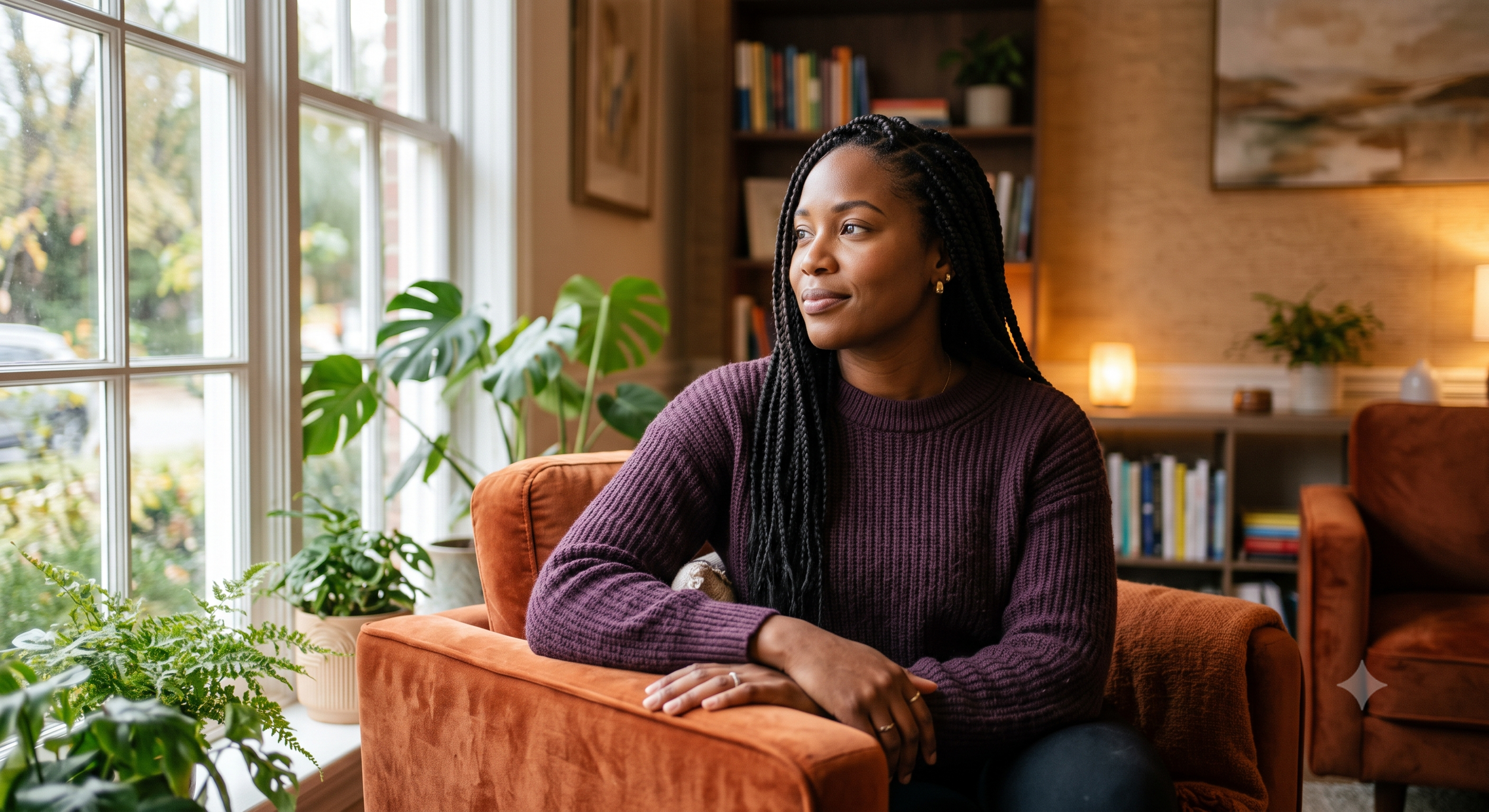
Picture her: it's 2 a.m., her jaw is clenched, her heart is pounding. Her inbox is managed. Her family is taken care of. Her project is ahead of schedule. From the outside, she has it together. From the inside, she's barely holding on.
What she's experiencing has a name. It's anxiety. But anxiety symptoms in Black women rarely look the way anxiety is "supposed" to look. No visible panic. No dramatic breakdown. So it doesn't get labeled, treated, or addressed. It just keeps running underneath everything.
Why Anxiety Feels Different When You're a Black Woman
Anxiety in Black women is filtered through a specific set of lived realities: chronic racial stress, gendered expectations, and cultural scripts about strength that make distress nearly impossible to name out loud.
Chronic exposure to racial discrimination activates the body's stress response on a near-constant basis, raising physiological arousal in ways most standard anxiety screenings don't account for. Studies published in the American Journal of Public Health consistently link racial discrimination to significantly higher rates of PTSD, GAD, and social anxiety in Black women. This isn't fragility. It's a measurable response to a genuinely high-stress environment.
Add to that the compounded weight of navigating race and gender simultaneously, in every room, every interaction, every decision about whether to speak or stay quiet, and you have a stress load most clinical frameworks weren't built to see clearly.
Physical Symptoms That Get Overlooked
The most common physical signs include chronic muscle tension, persistent fatigue, gastrointestinal distress, headaches, chest tightness, and disrupted sleep. Research in Cultural Diversity and Ethnic Minority Psychology found that Black women are more likely than White and Latina women to express emotional distress somatically: the body carries what the mind doesn't yet have language for.
In clinical settings, these symptoms are routinely attributed to overwork, hormones, or aging. The anxiety connection gets missed entirely. Untreated somatic anxiety doesn't resolve on its own. Chronic tension becomes chronic pain. Disrupted sleep becomes a sleep disorder. Treating the physical symptom without identifying the anxious source underneath is like turning off the smoke alarm while the fire keeps burning.
Emotional Signs That Hide Behind Strength
Hypervigilance is the nervous system's version of never clocking out: constantly scanning for threats, microaggressions, double standards. It looks like alertness and composure. It functions like anxiety.
Perfectionism and people-pleasing are anxiety management strategies long before they get recognized as symptoms. Emotional suppression, saying "I'm fine" while losing access to what you actually feel, is one of the most psychologically costly features of what researcher Cheryl Woods-Giscombé calls the Strong Black Woman schema. Her research links higher endorsement of this schema directly to elevated anxiety symptoms over time.
Overworking functions as avoidance. Stillness creates space for anxiety to surface, and staying in motion prevents that. This is why high-functioning anxiety goes unrecognized most often in Black professional women.
The Real Barriers to Care
Several barriers consistently appear in the research: cultural stigma, deep-rooted mistrust of healthcare systems, a shortage of Black therapists, and financial access challenges. Most standard anxiety screening tools were also developed based on research with predominantly White participants, and they don't capture somatic presentations, culturally shaped behavioral patterns, or racial stress context. Under-diagnosis isn't only an access problem. It's a measurement problem.
According to NAMI, only about 25% of African Americans access mental health care. Delayed care consistently correlates with more severe symptom progression.
What Treatment Can Look Like
Several approaches have genuine evidence behind them:
Culturally adapted CBT targets perfectionism, catastrophizing, and fear of judgment, with explicit attention to racial stress and the Strong Black Woman schema. Clinical trials show moderate to large effect sizes.
EMDR is particularly effective when anxiety is rooted in racial or medical trauma. It doesn't require detailed retelling of traumatic events.
Faith-integrated therapy holds space for both the clinical and spiritual dimensions of healing without requiring either to be set aside.
Sister circles combine peer connection with structured CBT principles. Black women who participated in published studies described them as meaningful and genuine, not as a clinical approximation of community.
Finding the Right Therapist
A culturally competent therapist doesn't require you to explain code-switching, doesn't treat racial stress as background noise, and has genuine experience with anxiety as it presents in Black women. That means recognizing the Strong Black Woman schema, understanding somatic presentations, and being able to sit with the layered complexity of your actual life.
Zola Counseling Solutions is a group practice of Black therapists serving the DMV area. We specialize in anxiety, trauma, and burnout in Black women, and we accept major insurance to reduce financial barriers. You don't spend half the session providing cultural context before the real work begins.
For those outside the DMV area, Therapy for Black Girls and Psychology Today both offer cultural competence filters to help narrow the search.
You Already Know Something Isn't Right
The woman from the beginning of this piece, the one who holds everything together while her body keeps score at 2 a.m., maybe you recognized her immediately. Maybe you recognized yourself.
These symptoms aren't character flaws or signs of fragility. They're the nervous system doing its best with an extraordinary amount of load. You don't have to figure out the full path forward today. But you can take one step: name what you've been feeling, even just to yourself. Or schedule a consultation with a therapist who understands your experience and won't ask you to shrink it to fit a framework that was never built for you.
Getting help is not abandoning strength. It's an act of self-determination.
If what you read today felt familiar, that recognition matters. Zola Counseling Solutions offers culturally competent care for Black women navigating anxiety with therapists who get it and insurance options that make access real.